Public History
A blog for the history nerds, curiosity seekers, and lovers of the old.
Teaching the minds of the world, ideas of the past.
Blog one: January 21, 2020
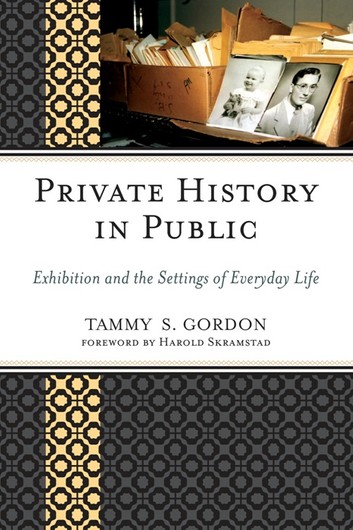
Private History in Public: Exhibition and the Settings of Everyday Life
Tammy S. Gordon
This book accounts the journeys Tammy Gordon took across America to find nearly unknown pieces of historical preservation. She wants to make it known to the public that not only do these museums exist in America, by also that even things that may seem insignificant in the grand scheme of things do reside among some of the most interesting exhibits. Gordon’s purpose in Private History in Public is to look at exhibits and museums that are rare and not well-known. She takes a look at places that may seem out of the ordinary but displays content in a way that can be viewed by the public. She wants people to understand that these places do have a purpose for historical benefit even if they are unconventional.
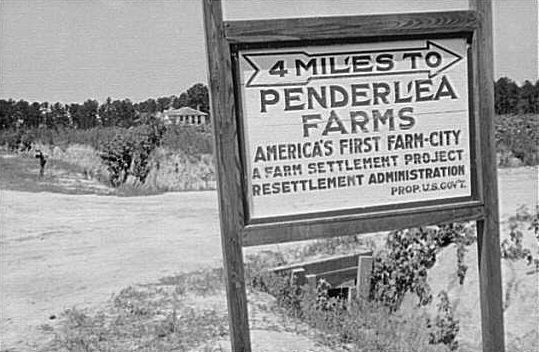
Tammy Gordon zones in more closely on three branches of exhibits: community, entrepreneurial, and vernacular. Community exhibits are meant to emphasize the surrounding community life from the perspectives of those that reside there, not the changes that have occurred overtime. Many community exhibits like the Penderlea Homestead Museum are created by people who’s identity has been shaped by the place being presented. The idea of creators being the people that the exhibit represents is a great way to give content that the general public can relate to.
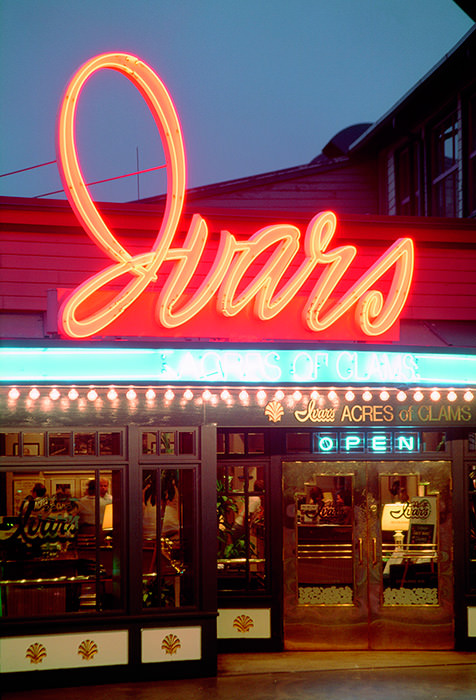
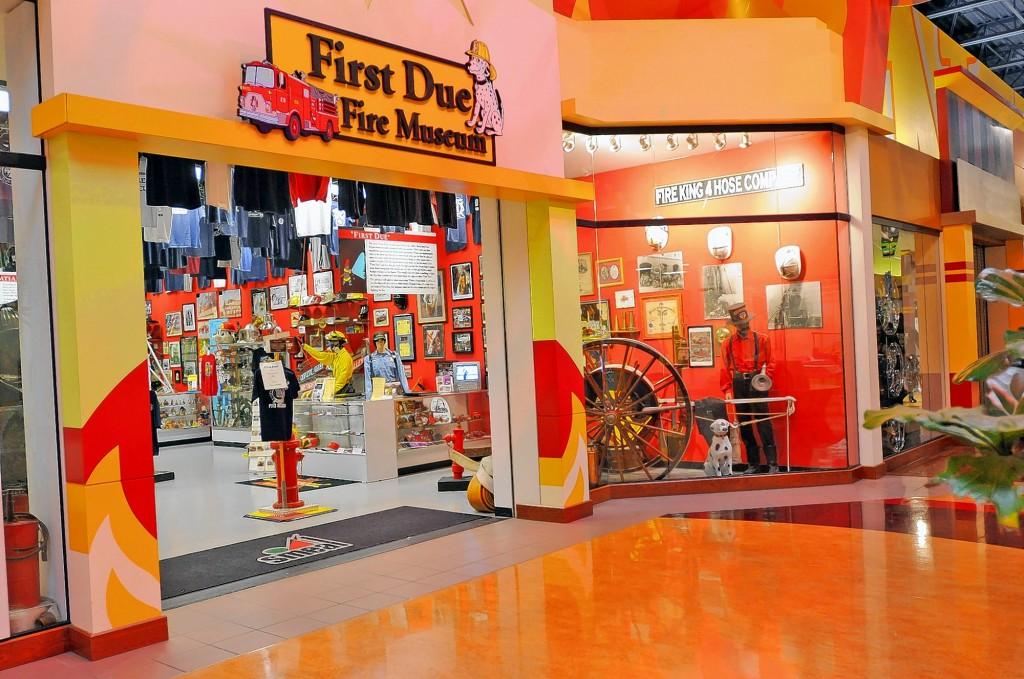
Entrepreneurial exhibits aim to reflect the traditional role of small businesses as well as the role of small business person. It is meant to showcase those who are committed to building their community. The First Due Fire Museum is a prime example of this type of exhibit because it is strongly committed to the local community of Hazelwood, Missouri. Lastly, vernacular exhibits brings a combination of resources from within the community and outside. It’s geared to bringing up a dialogue between those from the inside and outside to obtain a broader understanding of the content. Vernacular exhibits cross boundaries between business and education, so in order for there to be an education side, they need to be able to afford it. Ivar’s Acres of Clams in Seattle, Washington is an example of this type of exhibit because while it is a business selling food and drink, it is also showcasing its past history along the walls so that people may enjoy the eats and learn something new as well. I found it interesting that many places could be considered a museum and a specific type of exhibit. The fact that there are so many places out there that show even just a sliver of our past is mind blowing.
Blog Two: January 28, 2020
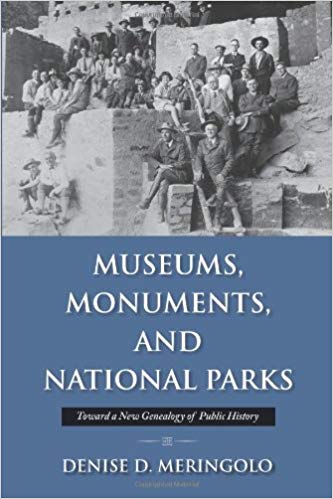
Museums, Monuments, and National Parks: Toward a New Genealogy of Public History
Denise D. Meringolo
This book discusses the beginnings of public history as an academic practice and how it was developed over 150 years. This field began with the preservation work that was undertaken by women who believed in the importance of restoration and preservation. Public History really became more prominent in the seventies as the first Public History Graduate Program popped up at the University of California, Santa Barbara in 1976. There was a first professional journal called “The Public Historian” which was published in 1978 and the National Council on Public History was established in 1980. It was during and after the Civil War that Public History started showing itself because people wanted to show of artifacts that were found and use items collected as a way to inform the public. It was actually scientists more so than historians who helped pave the way for the emergence of public history.
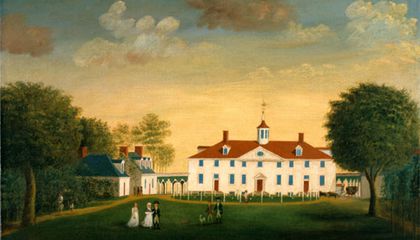
Women were the group mainly in charge of the rise of historic preservation. A woman named Ann Pamela Cunningham was most influential in sparking this idea of restoring significant historic landmarks including George Washington’s Mount Vernon Plantation. Her mother, Louisa Dalton Bird Cunningham, had said, “Why was it that women of his country did not try to keep it in repair, if the men could not do it?”. Although urging the state of Virginia to purchase the land in 1853 was unsuccessful, the Mount Vernon Ladies Association was started to bring awareness to other states that historical preservation needs to begin now. In reading this, I thought about historical sites in Philly’s Old City and those who sought to preserve them. Many places weren’t being preserved until the late-1920’s and 1930’s and many of those who led the efforts of preserving local historical landmarks were women. The Daughter’s of the Revolution took the lead in renovating the second floor of the newly built Independence Hall in the 1890’s. The Colonial Dames of America prevented demolition and preserved historic houses such as Stenton and the home of James Logan.
Blog THREE: February 11, 2020
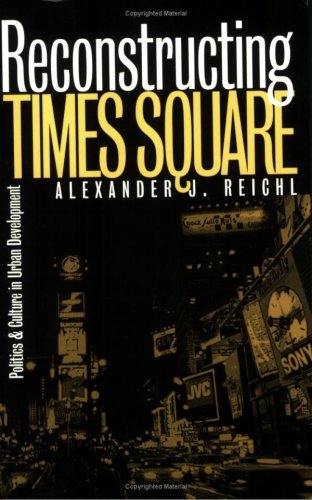
Reconstructing Times Square: Politics and Culture in Urban Development
Alexander Reichl
This was a tough read, and not just because of the discussions about zoning parameters, legal action, and politics. It was because it was set in New York City and I barely know my way around the city itself. I know Philadelphia, the city itself and the surrounding area. I’ve grown up here and since attending school in North Philly and working in Old City, I have learned far more about the history of this colonial city. However, it was interesting to see that the building up of a modern city like NYC is very similar to city that Philly has become overtime. In terms of what Times Square looked like in 1950 versus present day, the rebuilding of the area has been fast moving and quickly overturned. That is very similar to Philadelphia and what the city looked like years ago to now. The ideas of urban renewal and historic preservation show up all throughout the city in many different ways building it up as well as tearing down what was once there.

Public History Blog
Ally Moraschi
La Salle University
moraschia1@student.lasalle.edu
 ally's public history blog